The Light from the Heavens
I was going through my archive photos the other day, looking at pictures of things we have made in the past and searching for inspiration for new designs, and I noticed a recurring theme in the stones we use — namely labradorite. I do not know anything about it, except that we love it, so I started doing some research and ended up discovering that labradorite and another of our favourite stones, moonstone, are from the same family: feldspar. So why not put them together in a little bite of knowledge?
Labradorite
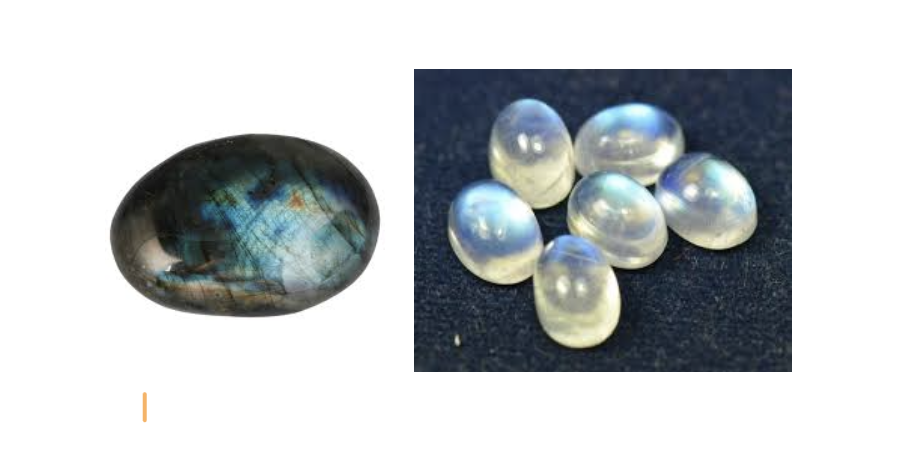
As its name suggests, labradorite comes from Labrador in Canada, and the ancient belief is that the Aurora Borealis has come to earth and been captured in the stone — which explains the blue and green lights that move so beautifully when the stone is polished. This wonderful iridescence is called labradorescence, and one of the most appealing things about this stone is how varied it is. So many of the stones we have — beads, cabochons and facet-cut alike — are either grey or brown at first glance, and then you pick the stone up and a flash of turquoise or bright green or rich blue appears. We also know how stunning it looks in 22ct gold, which largely explains how much we use it.
Sometimes, though, the stone is just full of wonderful colours with hardly any grey or brown in it, and there is a good chance that this is actually Spectrolite — which is only found in Finland, and was not discovered until the Second World War, quite by accident. The stone from Canada and that from Finland are actually the same thing, but the Finnish stones tend to be much brighter, richer and more varied in colour. Spectrolite is only found in Finland, but labradorite has now been found in Madagascar, China, Australia, Slovenia and the US — and yet it is still associated with the northern hemisphere and the northern lights.
Moonstone
Moonstone, on the other hand, is a much more ancient stone. The Greeks and Romans used it, and the Romans believed it was solidified moonlight — thus the name. What a lovely idea. This little magpie is lucky enough that moonstone is one of three June birthstones (the other two being alexandrite and pearl), which probably helps explain my passion for it.
As varied as labradorite in its range of colours, there are actually five kinds of moonstone, which come from different regions of the world and produce different colours including green and pink. The most well-known is the pale stone with a sort of floating blue light in it — called adularescence, because fine-quality moonstone was mined in the Swiss Alps on Mont Adular. The best moonstones are now mined in Sri Lanka and India in artisanal mines.
Even though it has been used in jewellery for such ages, moonstone really came to the fore in the Art Nouveau period and has stayed popular ever since. Usually it is cut en cabochon, but somewhere on a gem hunt, Polly found a magnificent piece of free-form moonstone that had been faceted. Unable to resist, she scooped it up, brought it home, and made a wonderful brooch. The photograph captured the extraordinary blue light in the stone, but sitting in its tray it looks quite white — amazing, interesting and alluring.
One little factoid about moonstone: it is the Florida state gemstone — even though it is not mined there — and was designated as such in 1970 to commemorate the moon landing.
Even without all this knowledge about first cousins labradorite and moonstone, this magpie has always known there was something special about these stones. I have had jewellery made with both since I moved away from plastic bangles in my littlehood, and I probably always will.